

I. What is Capital Gains Tax?
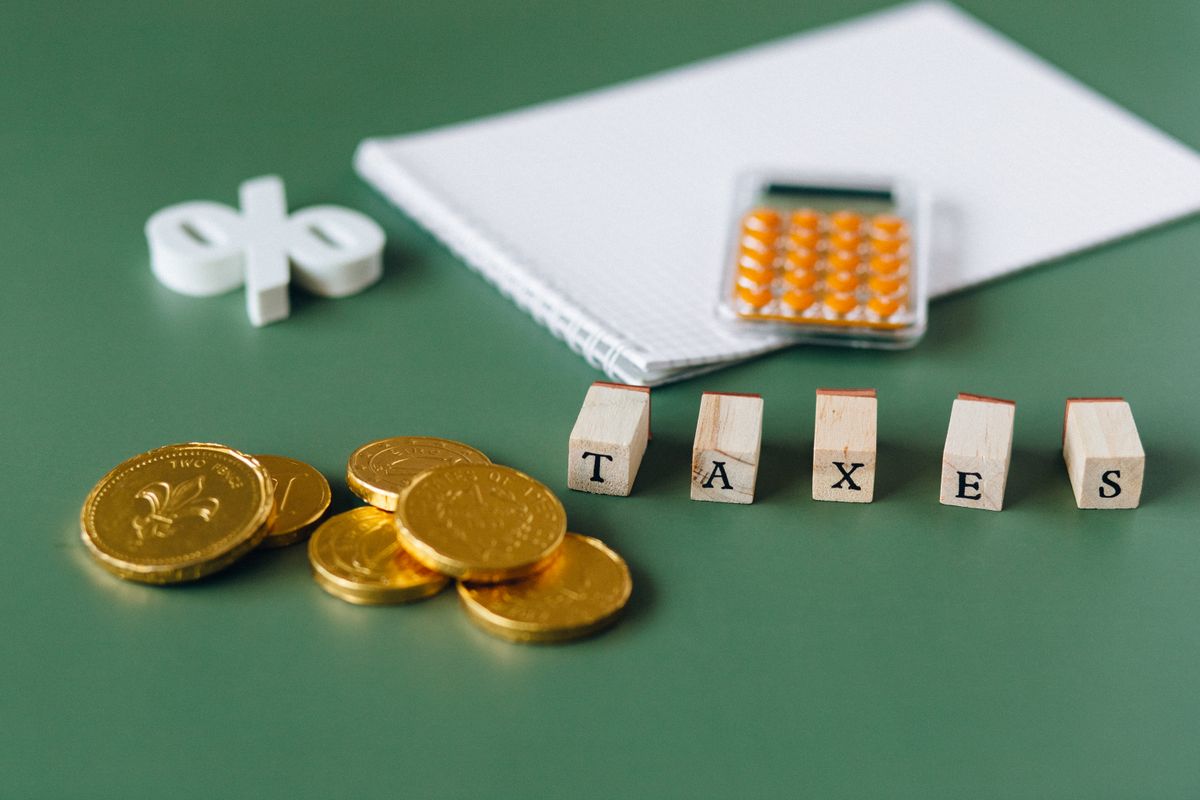
Capital gains typically refer to the profit earned from selling an asset at a higher price than its purchase price due to appreciation. Capital gains tax is the tax levied on this appreciation in value. Disposing of assets such as stocks, real estate, funds, bonds, and patents or copyrights may all fall under the scope of capital gains.
Different jurisdictions handle capital gains differently. Some regions establish a standalone capital gains tax levied at a fixed rate, while others differentiate based on holding periods—imposing lower tax rates for long-term holdings and higher rates for short-term trades.
Hong Kong has not established an independent, dedicated capital gains tax. Its tax logic distinguishes asset disposal gains into "capital nature gains" and "trading nature profits" under the Inland Revenue Ordinance (Cap. 112), administered by the Inland Revenue Department (IRD). Selling assets after a long-term holding period is generally treated as the disposal of capital assets. Conversely, frequent buying and selling or engaging in low-buy-high-sell activities as a primary business may be treated as a trade or business, making the profits subject to profits tax.
II. Hong Kong Capital Gains-Related Tax Policy: Distinguishing Investment from Business
Section 14 of the Inland Revenue Ordinance is the core basis: profits arising in or derived from Hong Kong from any trade, profession, or business carried on in Hong Kong are chargeable to profits tax, excluding profits derived from the sale of capital assets.
When determining whether a gain is a tax-exempt capital gain or a taxable trading profit, the IRD references the "badges of trade" standard, comprehensively evaluating factors such as asset holding period, transaction frequency, initial intention of purchase, and operational mode. Selling after long-term holding is generally recognized as a capital asset disposal, whereas frequent short-term trading may be recognized as carrying on a business.
1. Stock and Equity Disposal Gains
When ordinary individuals or enterprises purchase stocks as long-term investment assets and sell them after holding them for a relatively long period, the price differential earned may—subject to meeting relevant recognition criteria—be regarded as a capital-nature gain and is generally exempt from profits tax. For mainland investors buying Hong Kong stocks via Stock Connect and selling them after holding them for three or four years, the gains may similarly be treated as capital-nature gains and generally exempt from capital-related taxes, subject to meeting relevant recognition criteria and IRD guidelines. Furthermore, Chinese tax residents are legally obligated to pay taxes on their worldwide income. Relevant arrangements may be subject to anti-avoidance rules, and specific applications shall be determined in accordance with the latest regulations issued by the Chinese tax authorities.
However, if stock trading is treated as a primary business with high-frequency buying and selling aimed at short-term price differentials as the main profit model, the IRD may determine that the taxpayer is carrying on a securities trading business, and the profits will be subject to profits tax. The profits tax rate is up to 16.5% for corporations and up to 15% for unincorporated businesses (subject to the latest announcements by the IRD).
Note: While stock disposal gains may be exempt from tax, both buyers and sellers must pay stamp duty on securities transfers, which is a transactional document tax distinct from capital gains tax.
2. Real Estate Property Transactions
Hong Kong property transactions likewise distinguish between "capital investment" and "trading/speculation." When individuals purchase residential properties for self-occupation or long-term rental, and sell them after holding them for many years due to family relocation or asset readjustment, it constitutes the disposal of a capital asset, and the price difference is generally exempt from profits tax. However, the purchase/sale agreement is subject to stamp duty calculated based on the transaction price, which is independent of the appreciation profit.
If someone continuously purchases multiple properties and flips them rapidly over the short term with the primary intent of speculation, the IRD may determine that they are carrying on a property trading business, and the profits will be subject to profits tax. The IRD evaluates factors such as holding period, number of properties traded, source of funds, and initial intent.
Note: Although Hong Kong previously introduced Special Stamp Duty and Buyer's Stamp Duty, these measures were rescinded on February 28, 2024. However, while the stamp duty rules were lifted, the underlying logic for determining profits tax remains unchanged.
3. Interest, Dividends, Royalties, and Patent Income
Dividends distributed by local Hong Kong companies are generally exempt from profits tax for the recipient. Interest earned by ordinary individuals on bank deposits in Hong Kong is generally not taxed.
Royalties must be categorized accordingly: if patent authorization or trademark licensing constitutes the primary source of business revenue, it is treated as business operating income and is subject to profits tax. If patents, copyrights, or other capital assets are disposed of on a one-off basis, it constitutes a capital asset disposal, and the appreciation gain is generally tax-exempt.
The core principle remains the behavioral pattern: whether assets are held long-term before realization or operated continuously as a business.

III. Core Advantages of Hong Kong's Tax System
The following is an objective overview of the Hong Kong tax system. All tax concessions and incentives are subject to statutory requirements and do not apply automatically.
1. Territorial Source Principle and Simple Tax System
Hong Kong adopts a territorial source principle of taxation, levying profits tax only on profits arising in or derived from Hong Kong. Profits generated outside Hong Kong, even if remitted back to the city, are generally not taxed. Profits tax rates are highly competitive: a two-tiered system for corporations applies 8.25% on the first HKD 2 million of profits and 16.5% on the remainder. For sole proprietorships and partnerships, the rates are 7.5% on the first HKD 2 million and 15% on the excess (subject to the latest IRD announcements).
2. Tax-Exemption for Long-Term Investment Capital Gains
Capital appreciation from selling long-term holdings of stocks, equities, and other assets is generally tax-free. This arrangement exerts a positive impact on personal asset disposal as well as the venture capital and private equity markets. The prerequisite is meeting the qualification of a "long-term investment"; frequent trading deemed as a business activity cannot enjoy tax exemption.
3. Clear Policy Framework with Diverse Exemptions and Supporting Mechanisms
In addition to capital asset gain exemptions, Hong Kong's tax system features supporting structures. Introduced in 2024, the optimization mechanism for tax certainty on equity disposal gains stipulates that equity disposals meeting conditions such as holding duration and percentage can be presumed to be of a capital nature, reducing disputes (subject to official guidelines). Furthermore, the Foreign-Source Income Exemption (FSIE) regime accommodates the business layouts of large cross-border groups.
All exemptions and preferential treatments have boundaries and require complete transaction records. Hong Kong law requires business-related vouchers, documents, and transaction receipts to be retained for at least 7 years for IRD inspection.
4. High Tax Transparency and Policy Stability
Hong Kong's tax rules are codified in the Inland Revenue Ordinance, uniformly enforced by the IRD, and supported by publicly released guidelines and FAQs. Policy amendments undergo public legislative procedures, allowing the market to anticipate policy directions. This stable and transparent environment helps investors accurately calculate tax costs.
IV. Common Cognitive Misconceptions
Misconception 1: All assets sold at a profit in Hong Kong are tax-free.
Fact: The prerequisite for tax exemption is that the gain belongs to a capital asset disposal. If assets are traded frequently and deemed a business operation, the profits are subject to profits tax.
Misconception 2: There is a 20% capital gains tax on property sales in Hong Kong.
Fact: Hong Kong has no dedicated capital gains tax targeting property appreciation. Selling after a long-term investment holding usually incurs no profits tax; only property speculation conducted as a business is taxed. Stamp duty is charged based on transaction price, not on profits.
Misconception 3: Non-Hong Kong residents automatically enjoy all tax preferences.
Fact: Hong Kong tax rules apply the same determination criteria to both residents and non-residents; qualifying conditions must be met to enjoy capital gain exemptions.
Misconception 4: Tax-exempt gains mean no record-keeping is required.
Fact: Even if gains are tax-exempt, relevant contracts, transaction records, and bank statements must be properly retained for 7 years. If the IRD cannot verify long-term capital investment during an audit, it may reclassify the transaction and demand back taxes.
Summary
Long-term investment in stocks, equities, real estate, and other assets—followed by realization through sale—can qualify for tax exemptions under specific conditions. Conversely, treating asset trading as a business via high-frequency speculative transactions makes the resulting profits subject to profits tax. Low tax burdens, capital investment gain exemptions, and clear, stable policies are key factors attracting individual investors, venture capital institutions, and multinational corporations to Hong Kong.
Tax preferences are not unconditional benefits; each transaction must be evaluated based on actual circumstances. If you plan to invest or establish a company in Hong Kong, it is advisable to assess your transaction frequency and holding period against the IRD's determination logic, and consult professional tax and financial advisors when necessary to ensure tax compliance.
Note: Reference sources include the official website of the Inland Revenue Department of Hong Kong and the Inland Revenue Ordinance (Cap. 112).
Disclaimer
This article is for policy popularization and general information sharing only. It does not constitute any investment, legal, or tax advice, nor does it constitute any public offer, solicitation, or investment invitation. The tax rules mentioned herein are subject to the latest announcements by the Inland Revenue Department of Hong Kong and relevant laws and regulations, and specific applications must be evaluated based on actual circumstances. Investment involves risks; the market carries risks, and investors should exercise caution. To the maximum extent permitted by law, the company and its employees shall not bear any legal liability for any direct or indirect losses arising from the use of the content in this article. This article may not be reproduced, distributed, or disclosed to third parties without the prior written permission of the company.
des Voeux Family Office Limited. All rights reserved.