

I. Fed Policy Shift: Multiple Views Exist in the Market
According to public information, in September 2026, the Federal Reserve raised the target range for the federal funds rate by 25 basis points to 3.75%–4.00%, marking the first rate hike since July 2023. The dot plot indicates that most officials expect further adjustments may still occur within the year. Some institutional views suggest that this move is not the starting point of a prolonged rate-hike cycle, but rather closer to a phased recalibration of the policy framework. Federal Reserve Chairman Warsh previously stated that he would reduce reliance on forward guidance and place greater emphasis on economic data and financial market prices themselves.
II. Marginal Changes in Asset Allocation Logic
Against this backdrop, market participants' allocation logic across different asset classes is also adjusting.
Directions of Interest to Some Market Participants
AI Large-Cap Technology Hardware: As AI evolves from generative to agentic, physical AI, and ultimately general AI, infrastructure and computing power demand are viewed by some market perspectives as an area with relatively high growth visibility. Semiconductor indices can serve as one of the reference indicators for tracking this trend. The competitive landscape at the application layer remains unclear, but the beneficiary logic on the hardware side has formed a certain degree of consensus in the market.
Bank Stocks: In a rate-hike environment, net interest margins may expand, and combined with growth in wealth management business, this provides fundamental support for the banking sector.
US Dollar Cash Deposit Assets: In an environment where rates remain elevated, the allocation value of cash assets has strengthened.
Japanese Yen: Some market views consider the yen's fundamentals to be undervalued, while it also possesses dual support from rate hikes and macro safe-haven demand.
Directions Where the Market Is Divided or Relatively Cautious
US Treasuries: Debt repayment capacity and fiscal sustainability continue to attract market attention. The 10-year US Treasury yield touched above 5% in mid-September, reaching a new high since 2007. The linkage between US Treasuries and US equities still warrants attention.
Gold and Bitcoin: The rate-hike environment and adjustments to the Fed's policy framework logically provide some support for the US dollar, while exerting some pressure on dollar substitute assets.
RMB: The peak period for export settlement has passed, and the domestic deflation situation has not undergone fundamental changes. Some views suggest it may already be in a high range in the short term.
Oil: Electrification is accelerating the substitution of demand, and combined with supplies from Russia and other sources entering the market, supply-side concerns have been alleviated to some extent.
Hong Kong/A-share Market: Constrained by the macroeconomic environment, overall trends may remain range-bound.
US Treasuries and US Equities: Observing the Linkage
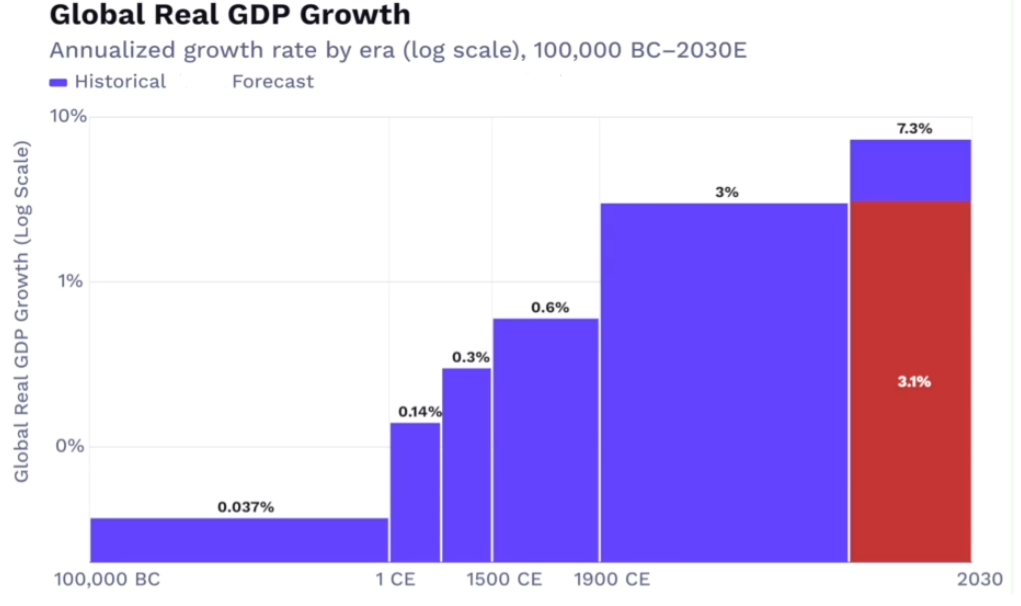
One of the core questions the market focuses on is whether rising US Treasury yields will transmit to US equities. Historical data shows that the global real GDP growth curve has exhibited an accelerating trend driven by technology.
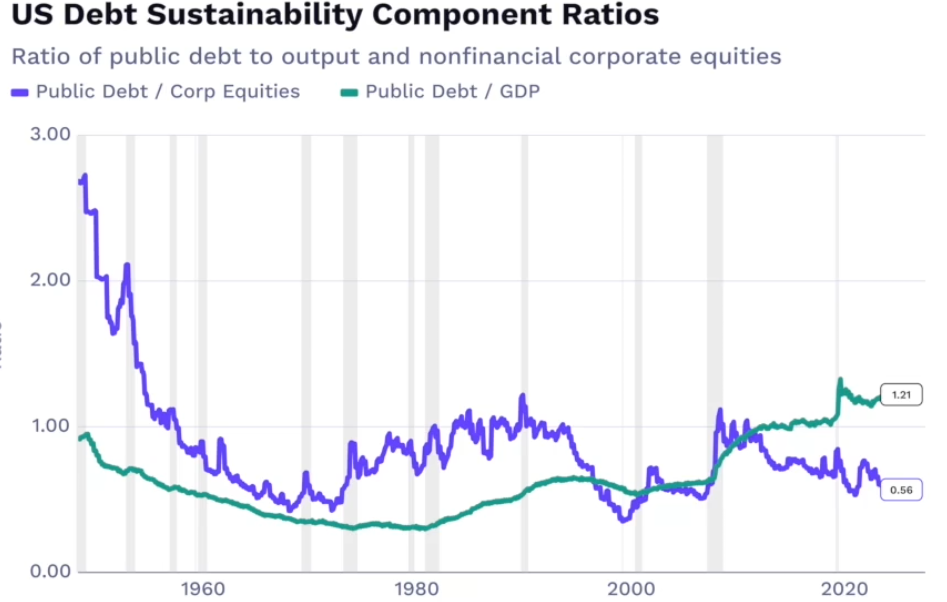
From the perspective of US debt sustainability component ratios, while the ratio of public debt to GDP is at a relatively high level, the ratio of public debt to corporate profits remains in a historically low range. This may imply that if US Treasury yields remain within a controllable range, US equities could still benefit from corporates' endogenous profit and business growth. The productivity gains brought by technology may have, to some extent, mitigated systemic risk.
III. AI Investment Returns: Dual Verification of Demand and Computing Power
The AI development path runs from generative AI to agentic AI, then to physical AI and general AI, with demand for infrastructure and data along the way being continuously monitored by the market.
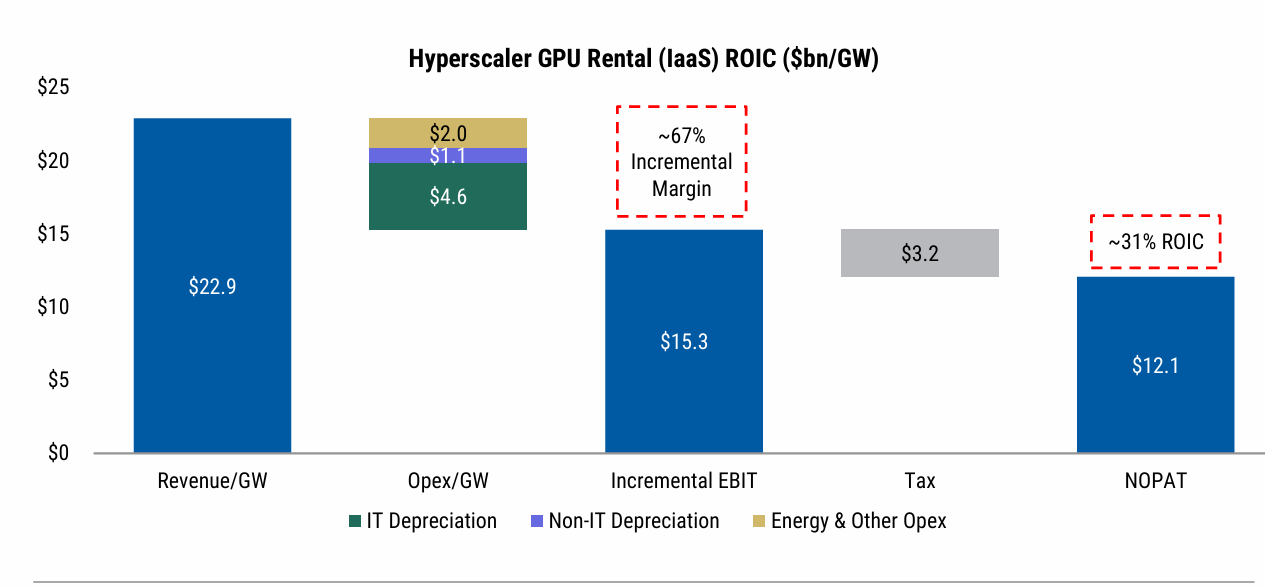
The core questions of market focus are mainly concentrated at two levels. First, the growth curve of AI model revenue. According to public information, Anthropic's annualized revenue climbed rapidly in 2026, growing from approximately $9 billion at the beginning of the year to hundreds of billions by mid-year, with the market holding relatively high expectations for its year-end performance. Second, the return on investment in AI infrastructure. According to estimates by some market institutions, the ROIC for hyperscale GPU leasing is approximately 30%. From the perspective of capital return structure, this level reflects the marginal output efficiency of computing power assets within their depreciation cycle, but it needs to be comprehensively assessed in conjunction with computing power utilization rates, electricity costs, and the pace of technological iteration. The above data provides some reference basis for views focused on the AI hardware sector.
IV. Competitive Landscape: Intense at the Application Layer, Benefiting at the Hardware End
The AI industry is typically described as a multi-layered structure, from the application layer down to the most fundamental power infrastructure. Competition at the application layer is exceptionally intense, and the positioning of leaders and followers may evolve rapidly. However, regardless of the final landscape at the application layer, demand for AI hardware is considered a relatively certain beneficiary direction. Therefore, for investors seeking to diversify individual stock risk, semiconductor indices are among the observation tools more frequently discussed in the market.
V. Risk Disclosure and Patient Waiting
Although the above logic has some data support, there remain several uncertain factors in the current market that warrant continued attention: whether US Treasury yield trends remain controllable, whether AI infrastructure returns can be continuously verified, and whether model revenue growth can meet market expectations. These all require time to observe. Some market views suggest that waiting for a market pullback before seeking appropriate timing may be a more prudent strategic choice.
Conclusion
Against the backdrop of a rate-hike cycle and AI industry transformation proceeding in parallel, asset allocation requires balancing macroeconomic logic with industrial trends. des Voeux Family Office will continue to monitor market changes and provide objective, professional market observations.
Disclaimer
The content of this article is solely a market observation formed by des Voeux Family Office based on public information and internal discussions, provided for general reference only, and does not constitute any investment advice, offer, or commitment. The views, data, and forward-looking statements herein represent judgments only as of the date of publication and may be adjusted as market conditions change, with no guarantee of accuracy, completeness, or future performance. Investment involves risk; past performance does not represent future performance, and investors may lose all or part of their principal. des Voeux Family Office and its affiliates and employees may hold positions in assets mentioned herein and may also have business relationships with relevant companies. To the maximum extent permitted by law, des Voeux Family Office shall not be liable for any direct or indirect losses arising from the use of the content of this article. Readers should consult independent professional advisors before making any investment decisions. By reading this article, you indicate that you have understood and accepted all contents of this statement.
Data Sources: Global GDP growth data cited from public academic research; US debt sustainability ratio data cited from public market analysis; Federal Reserve policy information cited from official Federal Reserve statements and meeting minutes; Anthropic revenue data cited from Bloomberg and Anthropic public disclosures; US Treasury yield data cited from Xinhua Finance. This article was compiled and written by the des Voeux Family Office team, with AI-assisted editing.