

A 64 Billion RMB Inheritance Tax Bill That Redefines Perception!
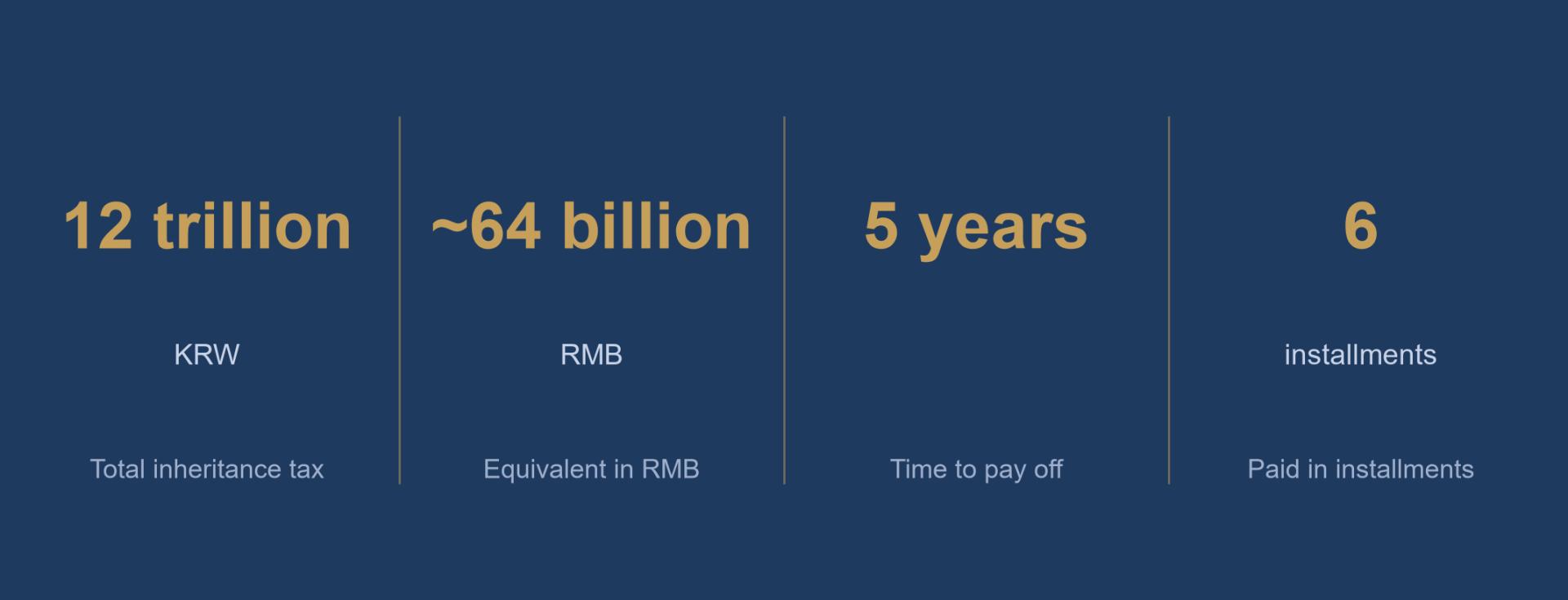
It took the Samsung family five years across six installments to pay off the entire inheritance tax left by the late Chairman Lee Kun-hee, totaling a staggering 12 trillion KRW—roughly equivalent to 64 billion RMB. According to public reports, this is one of the largest inheritance tax amounts paid by a single family globally in recent years.
To raise sufficient cash, the family had to pledge core equity and sell off real estate and artworks. If top-tier tycoons face such immense pressure, ordinary people should realize even more that wealth succession is never as simple as "earn it and smoothly pass it down." Many people work hard their entire lives, scrimping and saving to build up real estate, savings, and various assets, with their ultimate wish being to leave the next generation a secure foundation. However, the final stage of asset handover often hides a frequently overlooked issue—tax costs. Taxes will not show leniency just because you are wealthy, nor will they vanish automatically just because you are unprepared.
Several Countries with Stricter Inheritance Tax Regimes
Australia: No Inheritance Tax in Name, but Capital Gains Tax in Practice
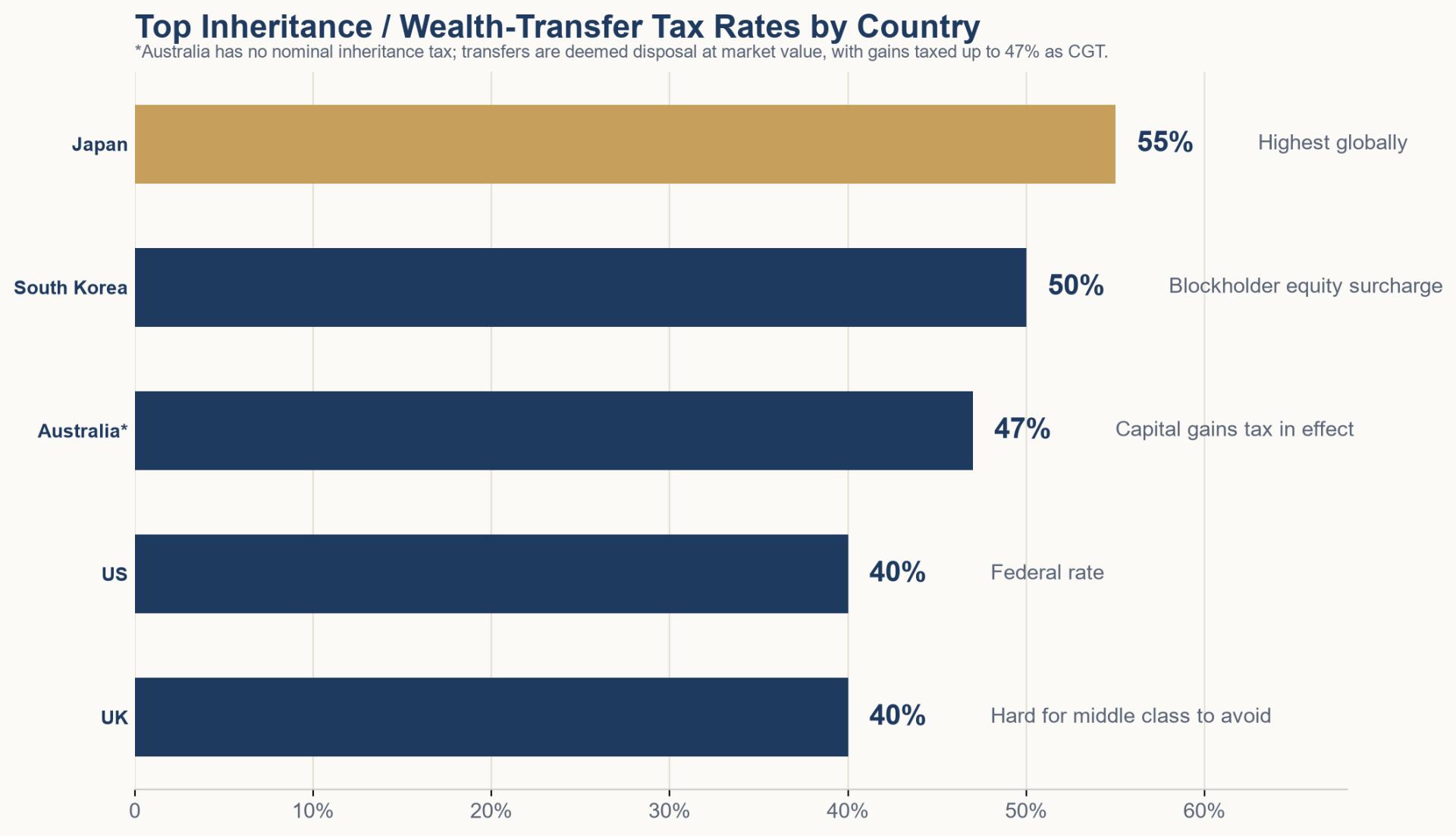
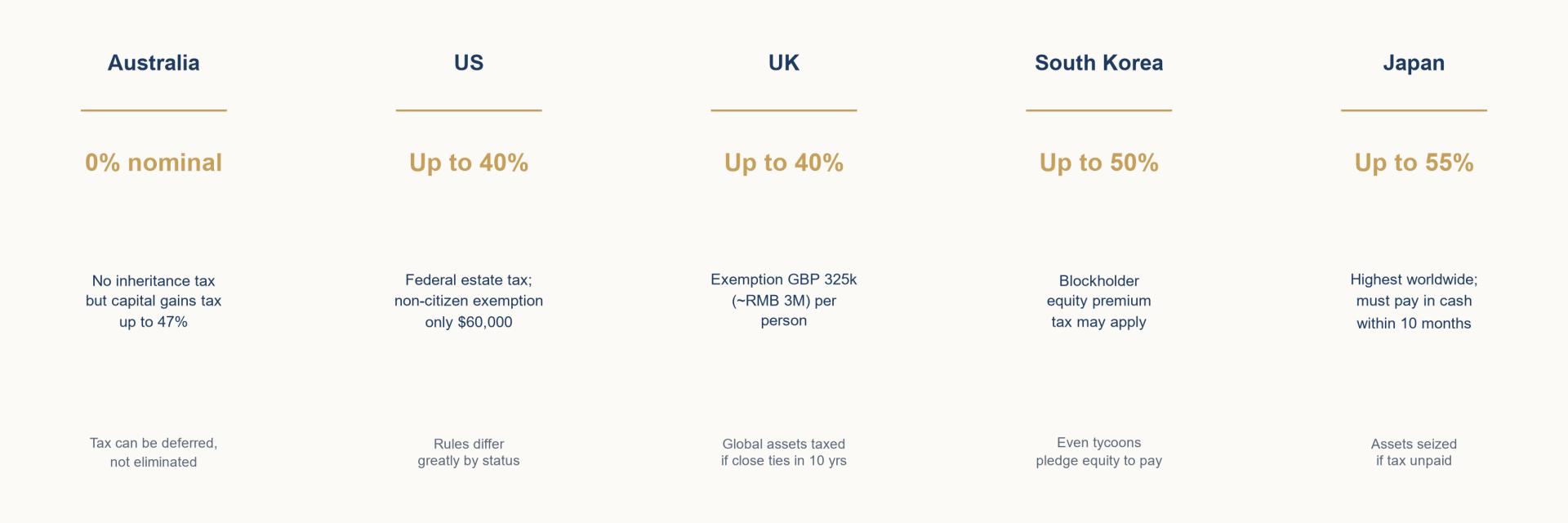
Australia does not have a nominal inheritance tax, but asset succession may be treated as a deemed disposal at market value, with the appreciation subject to capital gains tax at rates up to 47%. If heirs continue to hold and do not sell, tax payment can be deferred; completing liquidation within three years may also secure certain preferential treatments. While it looks mild on the surface, it is far from zero-cost—the tax is merely postponed rather than completely eliminated.
United States: Vast Rules Variations Based on Status
The top federal estate tax rate in the US is 40%. While US citizens and green card holders enjoy higher exemption thresholds, non-US citizens without green cards are granted a mere $60,000 exemption for assets located within the United States, with amounts exceeding that taxed at rates ranging from 18% to 40%. Furthermore, some states levy additional state estate taxes. Many individuals allocate capital into US stocks and real estate simply to diversify risks, yet they overlook how differences in residency status alter tax rules, ultimately allowing a large portion of their wealth to slip away.
United Kingdom: Difficult for the Middle Class to Escape
The UK inheritance tax top rate is 40%, with an exemption threshold of only 325,000 GBP (roughly 3 million RMB). For most households, a standard residential property alone can easily cross the taxation line. More critically, if an individual maintains close ties with the UK within ten years prior to passing away, their global assets may be retroactively subjected to taxation. This means that even after relocating overseas, one may still not completely escape the oversight of the British tax system.
South Korea: Even Tycoons Struggle to Cope
South Korea’s base inheritance tax top rate stands at 50%, and if the inheritance involves equity from controlling shareholders of listed companies, a blockholder premium tax may also be applied. The Samsung family’s astronomical tax bill is a true reflection of this system. Without sufficient liquid assets and diversified funding channels, ordinary families facing inheritance taxes are often forced into passive liquidations at distressed values, leading to severe wealth shrinkage.
Japan: Pay Taxes First, Inherit Later
Japan imposes an inheritance tax top rate of 55%, the highest in the world. Even stricter is the requirement that heirs must self-fund and fully pay the tax in cash within 10 months; otherwise, the inherited assets may be confiscated by the state. Even when inheriting real estate or equity, heirs may be forced to give them up simply because they cannot pull together the cash. Even members of the Japanese imperial family have had to surrender ancestral homes to the state via asset-in-lieu-of-tax arrangements because they could not muster up the massive tax bill. Hard-earned family fortunes can get completely stuck at the cash-payment hurdle, which is deeply lamentable.
Key Takeaways for Us
Wealth succession is never a simple matter of "leaving things to your children." Different countries, different legal statuses, and different asset types entail drastically different tax rules. Blindly configuring overseas assets and ignoring status differences can cause years of accumulated wealth to shrink dramatically.
For middle-class and high-net-worth families, proactively establishing asset protection, cash flow planning, and tax compliance is far more important than chasing short-term high returns. China has implemented unified real estate registration, and tax collection and administration have become increasingly digitalized and intelligent. Although China has not yet levied an inheritance tax and has never released related regulations or drafts, understanding the tax systems and rules of other countries and regions remains highly valuable as a reference for families with cross-border asset allocation needs.
Wealth accumulation relies on diligence, opportunity, and persistence; wealth succession relies on the wisdom of advance planning, a scientific asset architecture, and comprehensive tax compliance. When a family is involved in overseas studies, immigration and settlement, or cross-border asset allocation, tax compliance, asset security, and succession certainty should take priority over short-term high yields. If you only focus on making money blindly without planning ahead, the family fortune you spent half a lifetime building may one day transform not into a sheltering harbor for your children, but into a hefty tax bill.
Conclusion
True financial freedom is not just about how many assets you hold today, but ensuring that a century from now, the fruits of your labor can steadily safeguard the lives of the next generation.
Wealth accumulation relies on effort; wealth succession relies on wisdom. Planning ahead is the most reliable expression of love for your family.
Disclaimer
This article is shared for general information purposes only and does not constitute tax, legal, or investment advice. The contents regarding various national tax systems and case studies are compiled from publicly available channels and may change due to policy adjustments or regional differences. des Voeux Family Office makes no guarantees regarding their accuracy, completeness, or timeliness. The specific application of inheritance tax systems across different countries varies significantly depending on individual status, asset types, residency status, and judicial jurisdictions. Readers should consult qualified professional advisors based on their actual circumstances before making any decisions related to wealth succession, asset allocation, or tax arrangements. des Voeux Family Office and its affiliates assume no liability for any decisions or actions made in reliance upon the contents of this article. This article does not constitute an offer, solicitation, or recommendation for any financial products or services.
des Voeux Family Office Limited. All Rights Reserved.
- Previous: 没有了!
- Next: Asset Allocation Considerations in a Rate-Hike Cycle: From AI to US Treasuries2026-09-29