

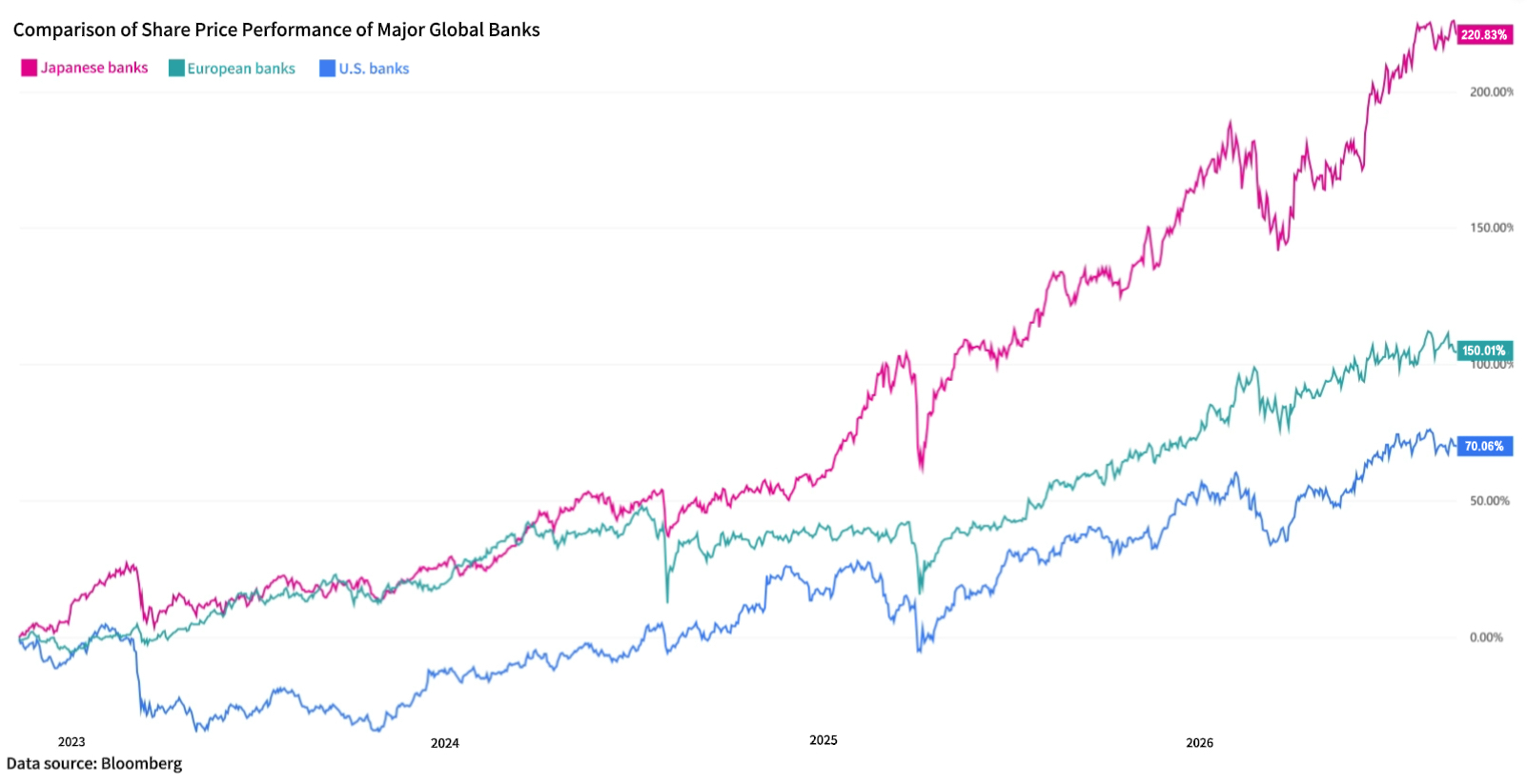
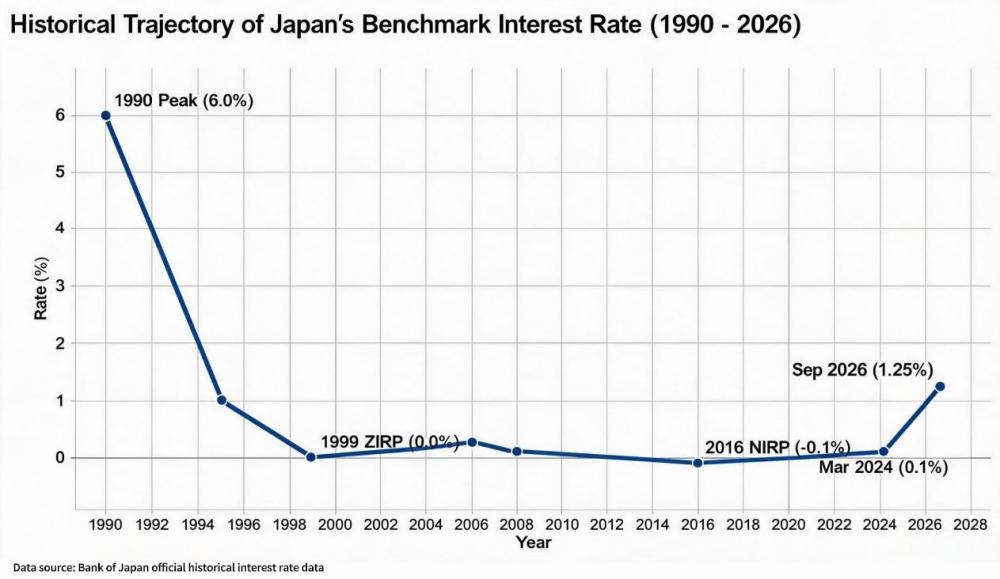
The net interest income of a bank's traditional business can be simplified into a formula: Total Lending × Net Interest Margin (NIM). Viewed from this perspective, the Japanese banking industry has benefited from a widening NIM in a post-reflation interest rate hike environment. Meanwhile, European banking has seen a recovery in total lending demand, driven by trillion-euro infrastructure and defense investments under the European Union's "Relaunch 2.0" plan in the wake of the Russia-Ukraine conflict.
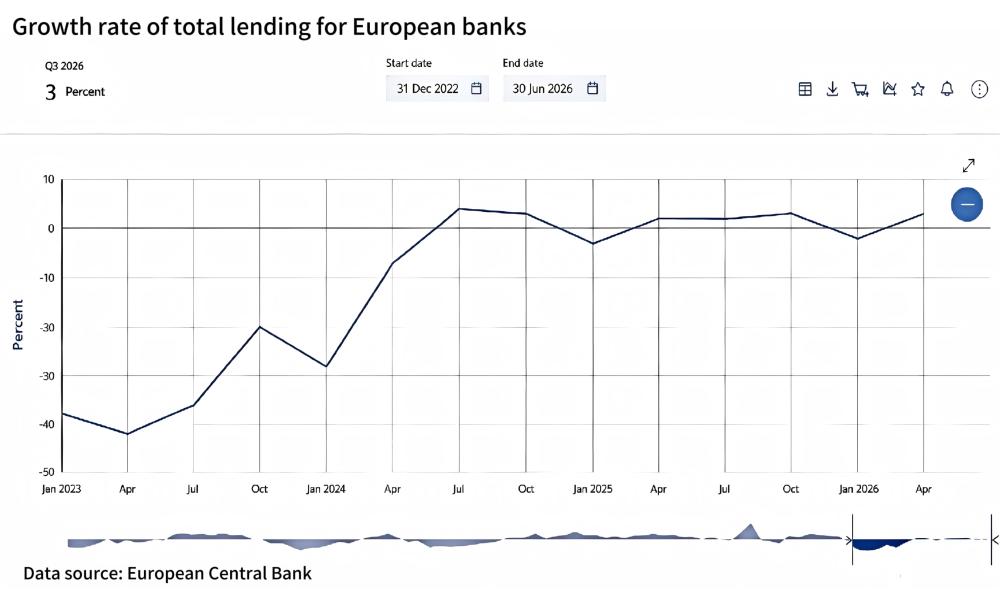
These factors together provide important support for the strong performance of European and Japanese banking and financial sectors over the past year. Of course, the sustainability of this logic still depends on monitoring the pace of monetary policy and the actual implementation of fiscal spending across various countries. If the pace of rate hikes slows down or if fiscal deployment falls short of expectations, the recovery space for traditional net interest income may correspondingly narrow.
From a medium-to-long-term perspective, banks' private banking divisions benefit from continuous AUM growth driven by the wealth effect. Their revenue can similarly be simplified into: Assets Under Management (AUM) × Return on Assets (ROA) (fee efficiency).
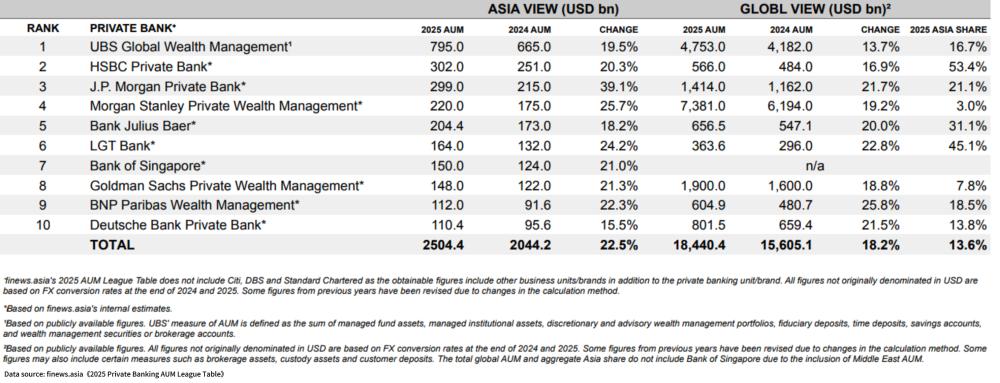
According to relevant market data, global major private banks achieved approximately 18% AUM growth in 2025, with the Asian market reaching around 23% and serving as a growth engine. Among them, HSBC, centered in Asia, and BNP Paribas, one of the fastest-growing players in Asia, have also been top-performing stocks over the past year. In terms of ROA, efficiency has continued to improve due to active trading and investment activities.
Together, these two drivers have fueled rapid revenue growth in private banking divisions. For banks, this segment carries relatively low risk and offers higher investment returns. This trend may help structurally enhance banks' valuations over the long term. However, private banking revenue growth is also closely tied to market activity, client risk appetite, and the regulatory environment. If market sentiment softens, the growth rates of AUM and ROA could experience volatility.
At the present juncture, we remain focused on the banking sector. Interest rate hikes continue to support banks' traditional lending businesses in the short term, while private banking serves as the medium-to-long-term secondary growth curve. From an investment perspective, key target characteristics to watch include banks that are undervalued, offer high dividend yields, and benefit from private banking operations—such as European banks with low valuations and high dividend yields, and Asian banks that benefit from wealth growth.
Overall, the allocation value of the banking industry lies in its ability to provide short-term net interest margin support while capturing the medium-and-long-term dividend of wealth growth through private banking divisions. However, specific target selection still requires a comprehensive assessment of valuations and dividend payout rates. In addition, business models, regulatory frameworks, and return on capital levels vary across regional banks; therefore, allocations should also factor in regional diversification and currency hedging dimensions.

DISCLAIMER
The information contained in this document has been prepared based on publicly available information. des Voeux Partners Limited ("DVP") in preparing this document, and des Voeux Family Office Limited ("DVFO") in reproducing this document, have taken reasonable care to ensure that the information contained herein is accurate and objective. However, neither DVP nor DVFO makes any representation or warranty as to the accuracy or completeness of the information contained in this document (including any valuation mentioned herein), nor has any independent verification of such information been conducted. DVP makes no representation or warranty as to the adequacy, completeness, or suitability of this document for any particular purpose.This document merely provides a macroeconomic overview of recent economic and market developments and is intended solely for marketing and reference purposes. This document is not an investment research report, nor should it be regarded as investment research. The preparation of this document has not complied with legal requirements intended to promote the independence of investment research, nor is it subject to any prohibition on dealing ahead of the dissemination of investment research. Unless otherwise specified, the source of information contained in this document is DVP. The opinions expressed herein represent the views of the author as of the date of writing and are subject to change at any time without prior notice. Any forecasts, estimates, or targets mentioned in this document are for reference only and are not guaranteed to be achieved. DVP and the author assume no liability for any failure to achieve such forecasts, estimates, or targets. In the event of any discrepancy or inconsistency between the Chinese and English versions of this document, the English version shall prevail.No person should rely solely on the contents of this document to make any investment or other decisions. All relevant decisions should be based on your independent judgment and after consulting appropriate professional advisers.This document does not constitute an offer or invitation to buy or sell any securities, financial instruments, or other investment products by DVP or its affiliates, nor does it constitute any investment, accounting, legal, or tax advice. The contents of this document shall not be regarded as investment advice, an offer, or a solicitation provided to any individual.Investing in any products mentioned in this document involves varying degrees of risk, including credit risk, market risk, liquidity risk, legal risk, cross-jurisdictional risk, foreign exchange risk, and other risks associated with electronic trading and leveraged product trading. Investment inherently carries risk, and you may not recover your full principal amount invested. Prices of investment products may fluctuate significantly, going up or down, and may even become valueless. Buying and selling investment products carries the risk of incurring losses rather than making profits.Nothing in this document constitutes personalized accounting, legal, regulatory, tax, financial, or other professional advice tailored to the personal circumstances of the reader. Before investing in any product, you should consult your own financial, legal, tax, or other professional advisers to fully understand the relevant risks and assess whether you are suited to bear such risks.All descriptions of any investment products herein are subject to the terms and conditions of the respective investment product and, where applicable, the prospectus or other relevant offering documents accompanying such investment product.To the maximum extent permitted by applicable laws and regulations, DVP, DVFO, and their affiliates shall not be liable for any loss or damage of any kind arising from any action taken or not taken by any person in reliance upon any information, opinion, forecast, or valuation contained in this document, regardless of how such loss or damage arises.This document and its contents are intended solely for professional investors as defined in the Securities and Futures (Professional Investor) Rules (Cap. 571D) of Hong Kong. This document and its contents have not been reviewed by the Securities and Futures Commission of Hong Kong (SFC).