

I. The Old Logic Fails: Scarcity Disappears, Consumption Returns to Rationality
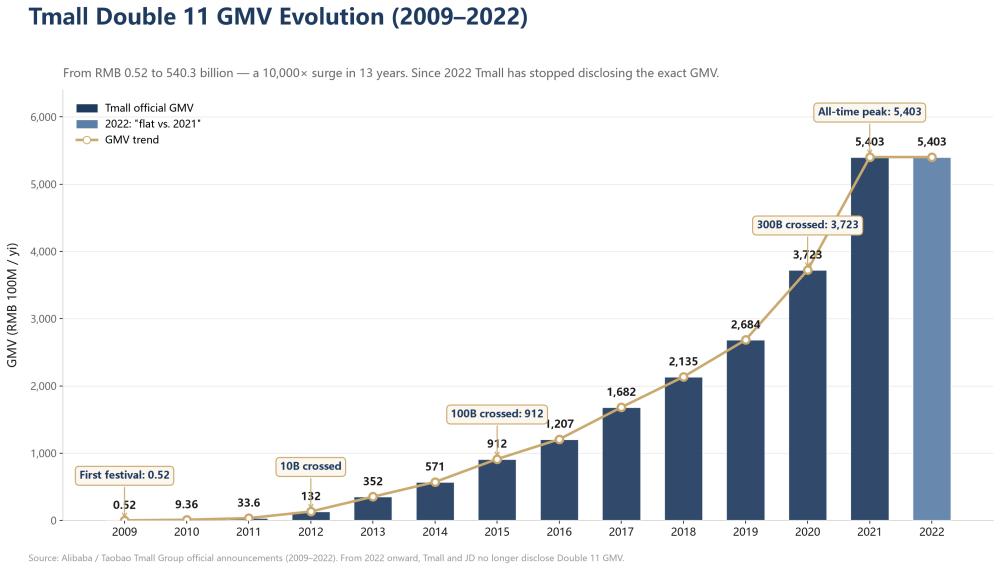
The cooling of Double 11 is essentially the end of the business model that has supported the shopping festival for over a decade: the low-price dividend has faded, and the mindset of all three parties—consumers, merchants, and platforms—has fundamentally shifted.
A decade ago, Double 11 was one of the few low-price windows in the year. To seize the rare opportunity, people were willing to stay up late, combine orders, and stock up on daily necessities. But now, e-commerce promotions have become normalized. Various promotional activities run throughout the year, and limited-time specials have become daily standards. Consumers have gradually become "immune" to discounts and are hard to be stirred into high enthusiasm by short-term low prices.

As industry experts have pointed out: the core issue behind Double 11's cooling is the loss of scarcity value. Nowadays, people only look at two things when placing orders: real cost-effectiveness and what they actually need right now. The era of blind stockpiling has completely ended.
While consumers are becoming more rational, the enthusiasm of small and medium-sized merchants for the shopping festival is also declining.
II. Dilemma: Simplified Gameplay Fails to Quench Merchants' Thirst
To adapt to the changes, major e-commerce platforms have collectively launched a "gameplay reduction" this year. Entering October, mainstream platforms have successively released their rules, with a highly unified overall direction: simplifying complex cross-store discounts, promoting direct price cuts with in-stock items, and achieving stable discounts throughout the entire cycle.
The platforms' efforts are aimed at returning the shopping festival to the essence of simple transactions. However, even with simplified rules, the vast majority of small and medium-sized merchants remain cautious about Double 11, even falling into the dilemma of "no profit if participating, no traffic if not."
According to general industry practice, participating in Double 11 requires merchants to offer 10% to 15% price concessions, plus additional paid advertising to compete for exposure. After deducting all discount losses, promotion expenses, and return costs, rising orders may not bring profit growth. More brutally, promotional traffic resources are highly concentrated, with platform traffic clearly tilting toward top brands, leaving small and medium-sized stores with relatively limited exposure.
Choosing to withdraw from the promotion also comes with consequences.
Multiple merchants admit that once absent, the store's overall sales, tier, and subsequent organic traffic may be affected to some extent. Platform algorithms typically include event participation in store assessments, and long-term absence may lower store weight.
After experiencing round after round of promotional baptisms, more and more small and medium-sized store owners are recognizing reality: order numbers are merely surface-level; net profit after deducting all costs is the core criterion for measuring whether this Double 11 is worth participating in.
III. The Ritual Evolves: From a National Carnival to Normalized Consumption
From the collective carnival of staying up until midnight to the leisurely consumption of ordering anytime, the evolution of the Double 11 ritual reflects the decade-long iteration and upgrade of the entire e-commerce industry, as well as the steady growth of public consumption concepts.
In the past, the reason Double 11 could create a highly atmospheric shopping ritual was that it was a "once-a-year scarce benefit." As the e-commerce industry enters the stock market era, the normalization of promotions has completely broken the scarcity. Consumers no longer need to concentrate their purchases on a specific node; they can wait for livestream specials anytime they want to buy something. The shopping festival is no longer the only low-price window. People no longer need to make lists in advance or set alarms; they simply browse as needed, making the entire shopping process calm and relaxed.

Merchants' operational focus has also shifted. In the past, they treated Double 11 as a key opportunity to clear inventory, boost sales, and elevate store tiers. Now that the market has shifted from incremental to stock, customer acquisition costs have risen, and low-price traffic attraction can hardly bring long-term repurchases. Rather than short-term volume, stabilizing gross margins, revitalizing old customers, and building long-term repurchases are the way out for long-term business.
Platform-level reforms are also accelerating the fading of the carnival atmosphere. By extending the event cycle and simplifying discounts and pre-sales, platforms are actively weakening the tension of "limited-time rush purchases" and spreading the concentrated traffic explosion across the entire event cycle.
Conclusion
It is undeniable that Double 11 will not come to an end. It remains an important window for brands to launch new products and drive sales. However, it has shed its once-feverish colors and is slowly returning to its commercial essence: attracting customers with discounts, retaining them with quality products, and solidifying them with comprehensive services.
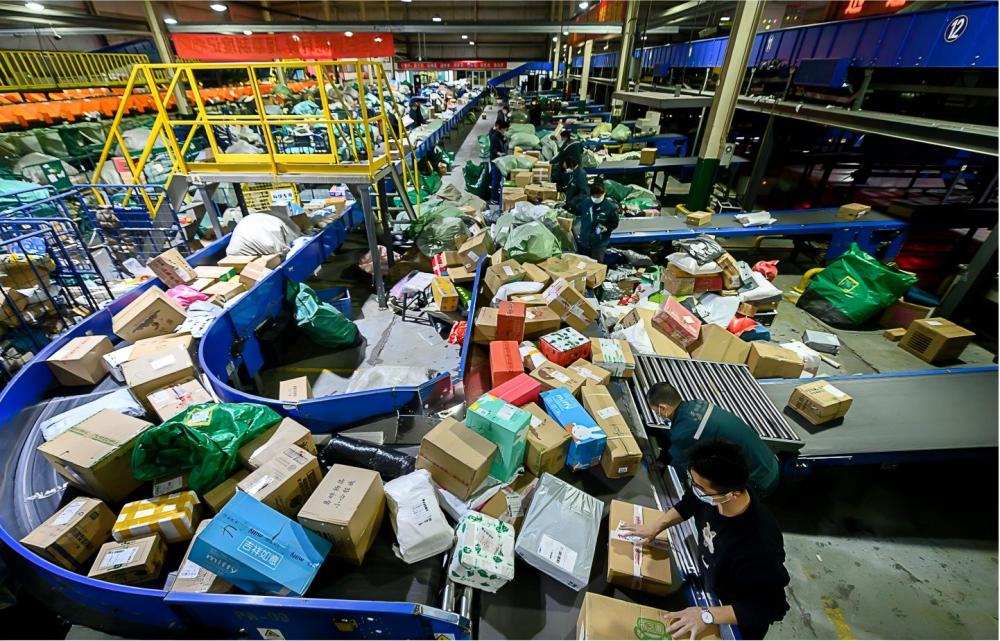
In the future, Double 11 will no longer compete over who stays up later or who is better at combining orders. Instead, it will compete on product cost-effectiveness, logistics fulfillment efficiency, and after-sales service. As the fever fades and rationality returns, this shopping event that has spanned 18 years is steadily moving toward a healthier and more sustainable direction.
DISCLAIMER
The information contained in this document has been prepared based on publicly available information. des Voeux Partners Limited ("DVP") in preparing this document, and des Voeux Family Office Limited ("DVFO") in reproducing this document, have taken reasonable care to ensure that the information contained herein is accurate and objective. However, neither DVP nor DVFO makes any representation or warranty as to the accuracy or completeness of the information contained in this document (including any valuation mentioned herein), nor has any independent verification of such information been conducted. DVP makes no representation or warranty as to the adequacy, completeness, or suitability of this document for any particular purpose.This document merely provides a macroeconomic overview of recent economic and market developments and is intended solely for marketing and reference purposes. This document is not an investment research report, nor should it be regarded as investment research. The preparation of this document has not complied with legal requirements intended to promote the independence of investment research, nor is it subject to any prohibition on dealing ahead of the dissemination of investment research. Unless otherwise specified, the source of information contained in this document is DVP. The opinions expressed herein represent the views of the author as of the date of writing and are subject to change at any time without prior notice. Any forecasts, estimates, or targets mentioned in this document are for reference only and are not guaranteed to be achieved. DVP and the author assume no liability for any failure to achieve such forecasts, estimates, or targets. In the event of any discrepancy or inconsistency between the Chinese and English versions of this document, the English version shall prevail.No person should rely solely on the contents of this document to make any investment or other decisions. All relevant decisions should be based on your independent judgment and after consulting appropriate professional advisers.This document does not constitute an offer or invitation to buy or sell any securities, financial instruments, or other investment products by DVP or its affiliates, nor does it constitute any investment, accounting, legal, or tax advice. The contents of this document shall not be regarded as investment advice, an offer, or a solicitation provided to any individual.Investing in any products mentioned in this document involves varying degrees of risk, including credit risk, market risk, liquidity risk, legal risk, cross-jurisdictional risk, foreign exchange risk, and other risks associated with electronic trading and leveraged product trading. Investment inherently carries risk, and you may not recover your full principal amount invested. Prices of investment products may fluctuate significantly, going up or down, and may even become valueless. Buying and selling investment products carries the risk of incurring losses rather than making profits.Nothing in this document constitutes personalized accounting, legal, regulatory, tax, financial, or other professional advice tailored to the personal circumstances of the reader. Before investing in any product, you should consult your own financial, legal, tax, or other professional advisers to fully understand the relevant risks and assess whether you are suited to bear such risks.All descriptions of any investment products herein are subject to the terms and conditions of the respective investment product and, where applicable, the prospectus or other relevant offering documents accompanying such investment product.To the maximum extent permitted by applicable laws and regulations, DVP, DVFO, and their affiliates shall not be liable for any loss or damage of any kind arising from any action taken or not taken by any person in reliance upon any information, opinion, forecast, or valuation contained in this document, regardless of how such loss or damage arises.This document and its contents are intended solely for professional investors as defined in the Securities and Futures (Professional Investor) Rules (Cap. 571D) of Hong Kong. This document and its contents have not been reviewed by the Securities and Futures Commission of Hong Kong (SFC).