

Earning is an Ability, Keeping is Wisdom: What Does Wealth Management Really Manage?
Many families who have worked hard for years and accumulated substantial assets often find themselves trapped in a kind of anxiety: having wealth, yet unable to keep it; having wealth, yet feeling insecure. Put it in the stock market, and it faces drastic volatility; keep it in the bank, and it silently shrinks under inflation. Add to this hidden risks such as children's education, major medical expenses, and retirement inheritance, and the unease is constant. We spend our entire lives striving to "earn money," yet we have never systematically learned to "keep wealth" and "pass on wealth." True wealth management is never simply speculating in stocks or buying funds; it is a lifelong护航 (escort) throughout the entire life cycle. So, what does it actually manage?
1. Managing Money: Scientific Allocation, Steady Appreciation
Many people's financial misconception is blindly following trends, chasing highs and selling lows. True asset management means making fully customized, all-category allocations based on the family's asset scale and risk tolerance.
2. Managing People: Risk Prevention and Control, Defending the Bottom Line
Creating wealth depends on opportunities, but keeping wealth depends on risk control. Invisible hidden risks (such as marital changes, corporate debt entanglement, tax compliance, and sudden illness) are far more fatal than market losses.
Professional wealth management means proactively building a risk firewall through tools such as insurance, family trusts, and tax planning, providing a safety net for uncontrollable risks in advance.
3. Managing Matters: Full-Scenario Life Empowerment
The essence of wealth is to improve quality of life. Managing matters means centering on full-scenario needs such as children's education, overseas study, high-end medical care, and retirement planning, so that wealth precisely serves every rigid demand at every stage of life.
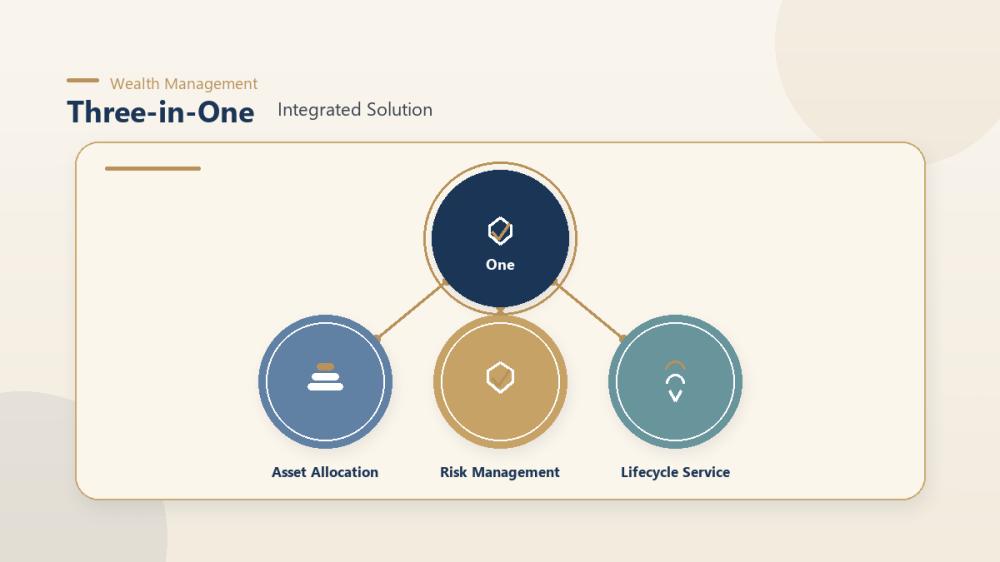
Truly implemented wealth management is not about selling you a single product, but a comprehensive solution.
Step 1, Customized Asset Allocation: Build a "offensive and defensive" model. Protective assets solidify the bottom line, fixed-income assets lock in cash flow, and equity assets pursue long-term returns, all dynamically adjusted with the market.
Step 2, Proactive Risk Management: Integrate legal, tax, and trust tools to avoid debt and marital disputes, and plug loopholes in wealth erosion.
Step 3, Full-Cycle Services: Upgrade from "pure finance" to "finance + medical + retirement" companionship, giving wealth management warmth.
In the past, wealth needs were very simple, focusing only on "making money fast." Today, whether for the middle class or high-net-worth families, needs have comprehensively shifted to "appreciation + risk avoidance + inheritance + lifestyle."
The wealth management industry has also upgraded from "selling products" to "long-term companionship centered on the user's life." Earning money relies on ability, while keeping and passing on wealth relies on professional systems. Managing assets solely based on personal experience can hardly adapt to today's complex environment.
Conclusion
Having witnessed too many real cases: some people, lacking risk control, invest blindly and lose everything; others focus on their careers but neglect their health and family.
The ultimate meaning of wealth management is not to help you earn more money, but to give your life sufficient confidence and a way out. Regardless of market fluctuations, you always have a steady wealth foundation and a secure livelihood.
DISCLAIMER
The information contained in this document has been prepared based on publicly available information. des Voeux Partners Limited ("DVP") in preparing this document, and des Voeux Family Office Limited ("DVFO") in reproducing this document, have taken reasonable care to ensure that the information contained herein is accurate and objective. However, neither DVP nor DVFO makes any representation or warranty as to the accuracy or completeness of the information contained in this document (including any valuation mentioned herein), nor has any independent verification of such information been conducted. DVP makes no representation or warranty as to the adequacy, completeness, or suitability of this document for any particular purpose.This document merely provides a macroeconomic overview of recent economic and market developments and is intended solely for marketing and reference purposes. This document is not an investment research report, nor should it be regarded as investment research. The preparation of this document has not complied with legal requirements intended to promote the independence of investment research, nor is it subject to any prohibition on dealing ahead of the dissemination of investment research. Unless otherwise specified, the source of information contained in this document is DVP. The opinions expressed herein represent the views of the author as of the date of writing and are subject to change at any time without prior notice. Any forecasts, estimates, or targets mentioned in this document are for reference only and are not guaranteed to be achieved. DVP and the author assume no liability for any failure to achieve such forecasts, estimates, or targets. In the event of any discrepancy or inconsistency between the Chinese and English versions of this document, the English version shall prevail.No person should rely solely on the contents of this document to make any investment or other decisions. All relevant decisions should be based on your independent judgment and after consulting appropriate professional advisers.This document does not constitute an offer or invitation to buy or sell any securities, financial instruments, or other investment products by DVP or its affiliates, nor does it constitute any investment, accounting, legal, or tax advice. The contents of this document shall not be regarded as investment advice, an offer, or a solicitation provided to any individual.Investing in any products mentioned in this document involves varying degrees of risk, including credit risk, market risk, liquidity risk, legal risk, cross-jurisdictional risk, foreign exchange risk, and other risks associated with electronic trading and leveraged product trading. Investment inherently carries risk, and you may not recover your full principal amount invested. Prices of investment products may fluctuate significantly, going up or down, and may even become valueless. Buying and selling investment products carries the risk of incurring losses rather than making profits.Nothing in this document constitutes personalized accounting, legal, regulatory, tax, financial, or other professional advice tailored to the personal circumstances of the reader. Before investing in any product, you should consult your own financial, legal, tax, or other professional advisers to fully understand the relevant risks and assess whether you are suited to bear such risks.All descriptions of any investment products herein are subject to the terms and conditions of the respective investment product and, where applicable, the prospectus or other relevant offering documents accompanying such investment product.To the maximum extent permitted by applicable laws and regulations, DVP, DVFO, and their affiliates shall not be liable for any loss or damage of any kind arising from any action taken or not taken by any person in reliance upon any information, opinion, forecast, or valuation contained in this document, regardless of how such loss or damage arises.This document and its contents are intended solely for professional investors as defined in the Securities and Futures (Professional Investor) Rules (Cap. 571D) of Hong Kong. This document and its contents have not been reviewed by the Securities and Futures Commission of Hong Kong (SFC).

1. Managing Money: Scientific Allocation, Steady Appreciation
Many people's financial misconception is blindly following trends, chasing highs and selling lows. True asset management means making fully customized, all-category allocations based on the family's asset scale and risk tolerance.
Let each portion of capital do its job:
· a portion as a steady foundation (capital preservation);
· a portion for active appreciation (pursuing returns);
· and a portion kept flexible (for emergencies).
Through diversified investment and dynamic rebalancing, say goodbye to "making money by luck."
2. Managing People: Risk Prevention and Control, Defending the Bottom Line
Creating wealth depends on opportunities, but keeping wealth depends on risk control. Invisible hidden risks (such as marital changes, corporate debt entanglement, tax compliance, and sudden illness) are far more fatal than market losses.
Professional wealth management means proactively building a risk firewall through tools such as insurance, family trusts, and tax planning, providing a safety net for uncontrollable risks in advance.
3. Managing Matters: Full-Scenario Life Empowerment
The essence of wealth is to improve quality of life. Managing matters means centering on full-scenario needs such as children's education, overseas study, high-end medical care, and retirement planning, so that wealth precisely serves every rigid demand at every stage of life.

Truly implemented wealth management is not about selling you a single product, but a comprehensive solution.
Step 1, Customized Asset Allocation: Build a "offensive and defensive" model. Protective assets solidify the bottom line, fixed-income assets lock in cash flow, and equity assets pursue long-term returns, all dynamically adjusted with the market.
Step 2, Proactive Risk Management: Integrate legal, tax, and trust tools to avoid debt and marital disputes, and plug loopholes in wealth erosion.
Step 3, Full-Cycle Services: Upgrade from "pure finance" to "finance + medical + retirement" companionship, giving wealth management warmth.
In the past, wealth needs were very simple, focusing only on "making money fast." Today, whether for the middle class or high-net-worth families, needs have comprehensively shifted to "appreciation + risk avoidance + inheritance + lifestyle."
The wealth management industry has also upgraded from "selling products" to "long-term companionship centered on the user's life." Earning money relies on ability, while keeping and passing on wealth relies on professional systems. Managing assets solely based on personal experience can hardly adapt to today's complex environment.
Conclusion
Having witnessed too many real cases: some people, lacking risk control, invest blindly and lose everything; others focus on their careers but neglect their health and family.
The ultimate meaning of wealth management is not to help you earn more money, but to give your life sufficient confidence and a way out. Regardless of market fluctuations, you always have a steady wealth foundation and a secure livelihood.
Earning is confidence, managing is wisdom. Managing wealth well is managing your life well.

DISCLAIMER
The information contained in this document has been prepared based on publicly available information. des Voeux Partners Limited ("DVP") in preparing this document, and des Voeux Family Office Limited ("DVFO") in reproducing this document, have taken reasonable care to ensure that the information contained herein is accurate and objective. However, neither DVP nor DVFO makes any representation or warranty as to the accuracy or completeness of the information contained in this document (including any valuation mentioned herein), nor has any independent verification of such information been conducted. DVP makes no representation or warranty as to the adequacy, completeness, or suitability of this document for any particular purpose.This document merely provides a macroeconomic overview of recent economic and market developments and is intended solely for marketing and reference purposes. This document is not an investment research report, nor should it be regarded as investment research. The preparation of this document has not complied with legal requirements intended to promote the independence of investment research, nor is it subject to any prohibition on dealing ahead of the dissemination of investment research. Unless otherwise specified, the source of information contained in this document is DVP. The opinions expressed herein represent the views of the author as of the date of writing and are subject to change at any time without prior notice. Any forecasts, estimates, or targets mentioned in this document are for reference only and are not guaranteed to be achieved. DVP and the author assume no liability for any failure to achieve such forecasts, estimates, or targets. In the event of any discrepancy or inconsistency between the Chinese and English versions of this document, the English version shall prevail.No person should rely solely on the contents of this document to make any investment or other decisions. All relevant decisions should be based on your independent judgment and after consulting appropriate professional advisers.This document does not constitute an offer or invitation to buy or sell any securities, financial instruments, or other investment products by DVP or its affiliates, nor does it constitute any investment, accounting, legal, or tax advice. The contents of this document shall not be regarded as investment advice, an offer, or a solicitation provided to any individual.Investing in any products mentioned in this document involves varying degrees of risk, including credit risk, market risk, liquidity risk, legal risk, cross-jurisdictional risk, foreign exchange risk, and other risks associated with electronic trading and leveraged product trading. Investment inherently carries risk, and you may not recover your full principal amount invested. Prices of investment products may fluctuate significantly, going up or down, and may even become valueless. Buying and selling investment products carries the risk of incurring losses rather than making profits.Nothing in this document constitutes personalized accounting, legal, regulatory, tax, financial, or other professional advice tailored to the personal circumstances of the reader. Before investing in any product, you should consult your own financial, legal, tax, or other professional advisers to fully understand the relevant risks and assess whether you are suited to bear such risks.All descriptions of any investment products herein are subject to the terms and conditions of the respective investment product and, where applicable, the prospectus or other relevant offering documents accompanying such investment product.To the maximum extent permitted by applicable laws and regulations, DVP, DVFO, and their affiliates shall not be liable for any loss or damage of any kind arising from any action taken or not taken by any person in reliance upon any information, opinion, forecast, or valuation contained in this document, regardless of how such loss or damage arises.This document and its contents are intended solely for professional investors as defined in the Securities and Futures (Professional Investor) Rules (Cap. 571D) of Hong Kong. This document and its contents have not been reviewed by the Securities and Futures Commission of Hong Kong (SFC).